

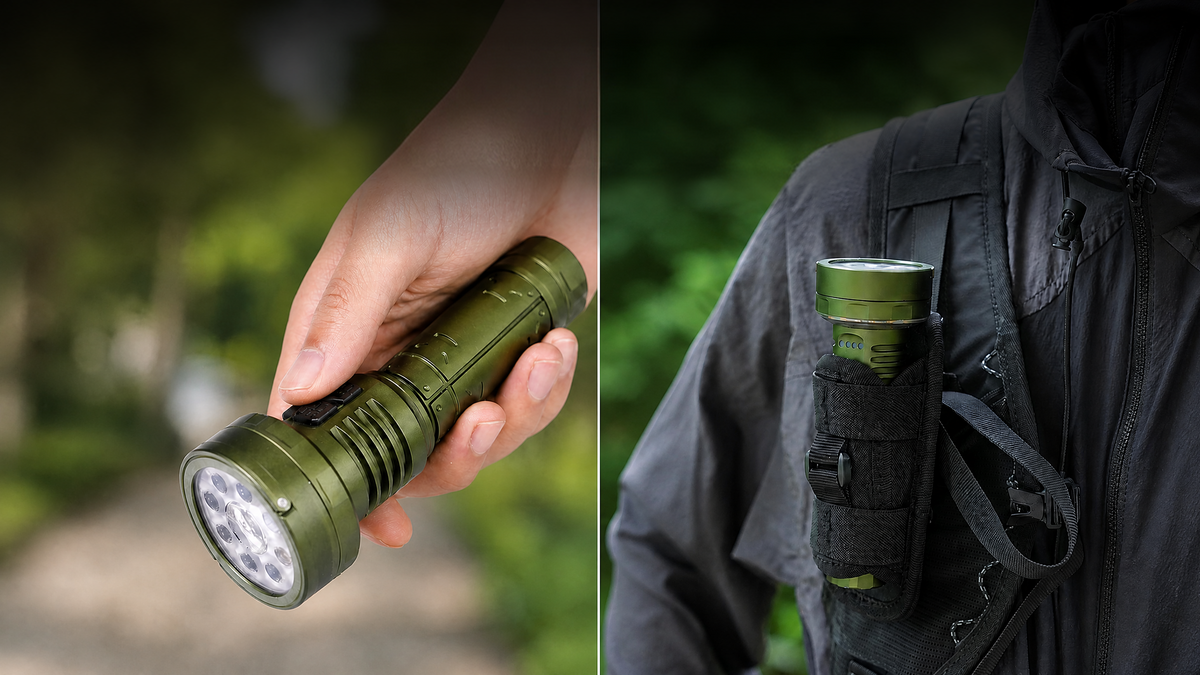
A good camping flashlight should match the way it will be used, from walking trails to handling camp chores after dark.
- Choose beam distance and coverage based on the activities users expect.
- Look for adjustable brightness, practical battery life, and simple charging.
- Favor a compact design that can handle outdoor conditions.
- Consider whether a flashlight can support hands-free or emergency use.
- Test the light before leaving and keep a backup plan for power.
Why Choosing the Right Camping Flashlight Matters
Darkness changes a familiar campsite quickly. A short walk to the restroom can become uncertain, while cooking, packing, or checking a trail marker may require both clear vision and steady light. When users choose a camping flashlight, users are choosing a small piece of outdoor equipment that supports comfort, movement, and basic safety.
The brightest model is not automatically the best camping flashlight. Excessive brightness can drain batteries, create glare, or make it harder for their eyes to adjust. users get better results when I match the light to the task and choose controls that users can operate easily when it is cold, dark, or raining.
A useful camping flashlight buying guide should also consider storage and reliability. users want a light that is easy to find in a pack, comfortable to hold, and ready when users need it. **Simple controls matter most** when users are tired or dealing with an unexpected problem outside the tent.
Understand Your Lighting Needs During Camping
users start by listing the situations in which users expect to use a light. Trail walking calls for reach, while cooking and organizing gear call for broad coverage. A campsite can need several lighting styles in one evening, so users look for a camping flashlight that fits more than one task without becoming awkward to carry.
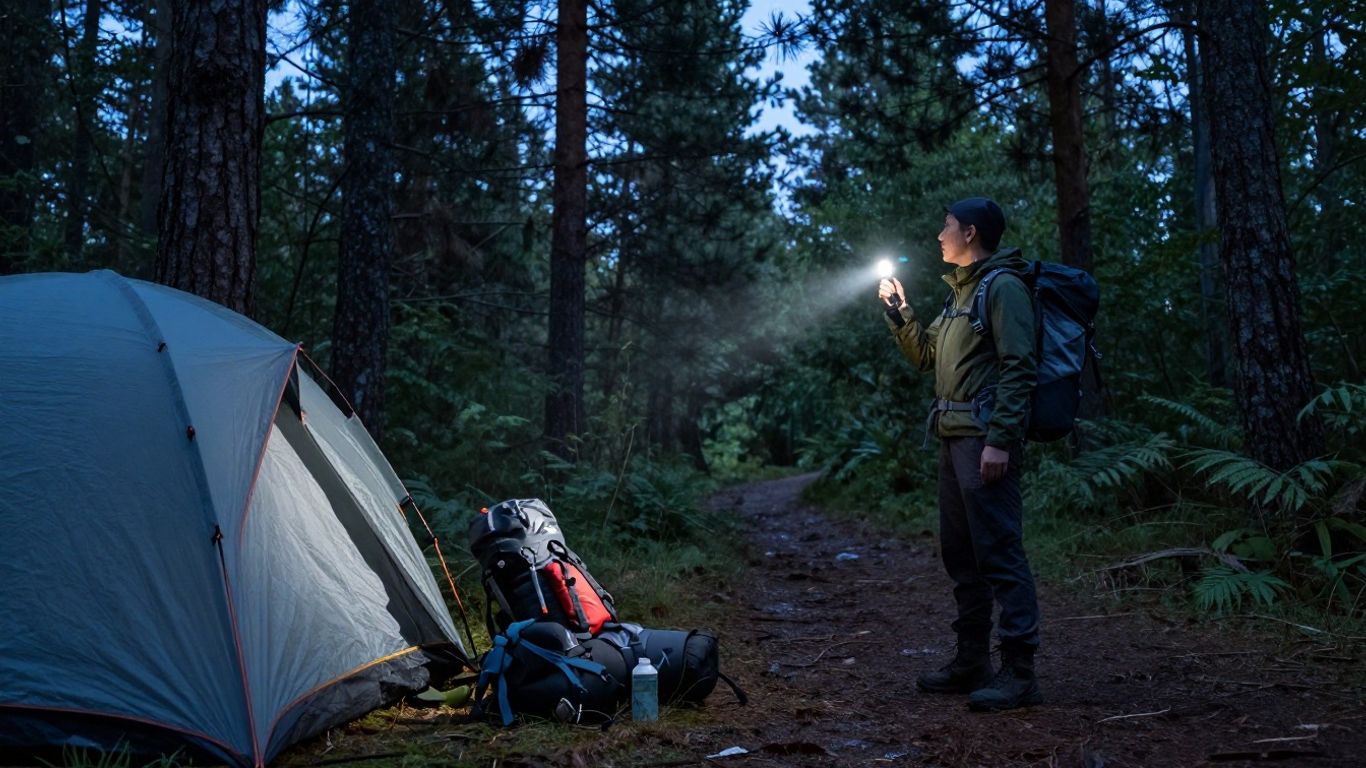
Long-Distance Lighting for Trails and Exploration
A focused beam helps me see farther along a path and notice roots, rocks, or changing terrain before I step on them. For this use, users look at beam reach, aiming comfort, and whether the light stays steady while I walk. A narrow, long-distance beam is useful for checking trail direction or scanning the area around camp.
I also avoid judging performance by brightness alone. A beam that reaches far but creates harsh glare may be tiring to use. users prefer a light with a focused setting that users can aim naturally, then reduce when users return to the campsite.
Wide-Area Lighting for Campsite Activities
Broad light works better when users are preparing food, sorting equipment, or helping someone find a misplaced item. It spreads illumination across the ground and nearby gear instead of concentrating it in one small spot. This reduces the need to keep repositioning the flashlight during ordinary camp tasks.
For a softer campsite mood, a warm light can be more comfortable than a bright white beam. The Volanter AF3 has an integrated camping light with a warm 2800K-3200K glow from 2835 warm-light LEDs. That documented feature fits moments when users need ambient light rather than a distant trail beam.
Hands-Free Lighting for Setup and Tasks
Hands-free lighting is useful when users are pitching a tent, adjusting a stove, or carrying supplies. A flashlight can still help if I place it securely on a stable surface or position it to illuminate the work area. Before a trip, users should check whether the body can stand steadily and whether the controls are easy to reach.
users should also think about where the light will live during setup. A pack pocket, vehicle console, or tent organizer can keep it close without adding clutter. The goal is not to carry every lighting accessory, but to make the main light easy to access when both hands are occupied.
Emergency Lighting When Things Go Wrong
A flashlight becomes more valuable when a routine problem interrupts camp. A dead phone, a loose strap, or a late return to the site can all make dependable illumination useful. users keep the light charged, place it where users can reach it quickly, and avoid storing it at the bottom of a full pack.
Some lights can also provide support beyond illumination. The AF3 is documented as functioning as a 10W power bank, which may help me think about charging needs as part of their emergency kit. users still carry appropriate backup power and avoid treating one device as a substitute for every safety measure.
What Makes a Good Camping Flashlight?
When users compare lights, users focus on controls and real use rather than a single headline specification. Brightness options, beam shape, battery capacity, and charging all affect how useful the flashlight feels outdoors. A good choice should be easy to understand before the trip and easy to operate during it.
The best fit depends on their routine. A casual campsite visit may need less capacity than a remote trip with long nights and limited access to power. I also consider whether the flashlight complements the rest of their gear instead of duplicating it.
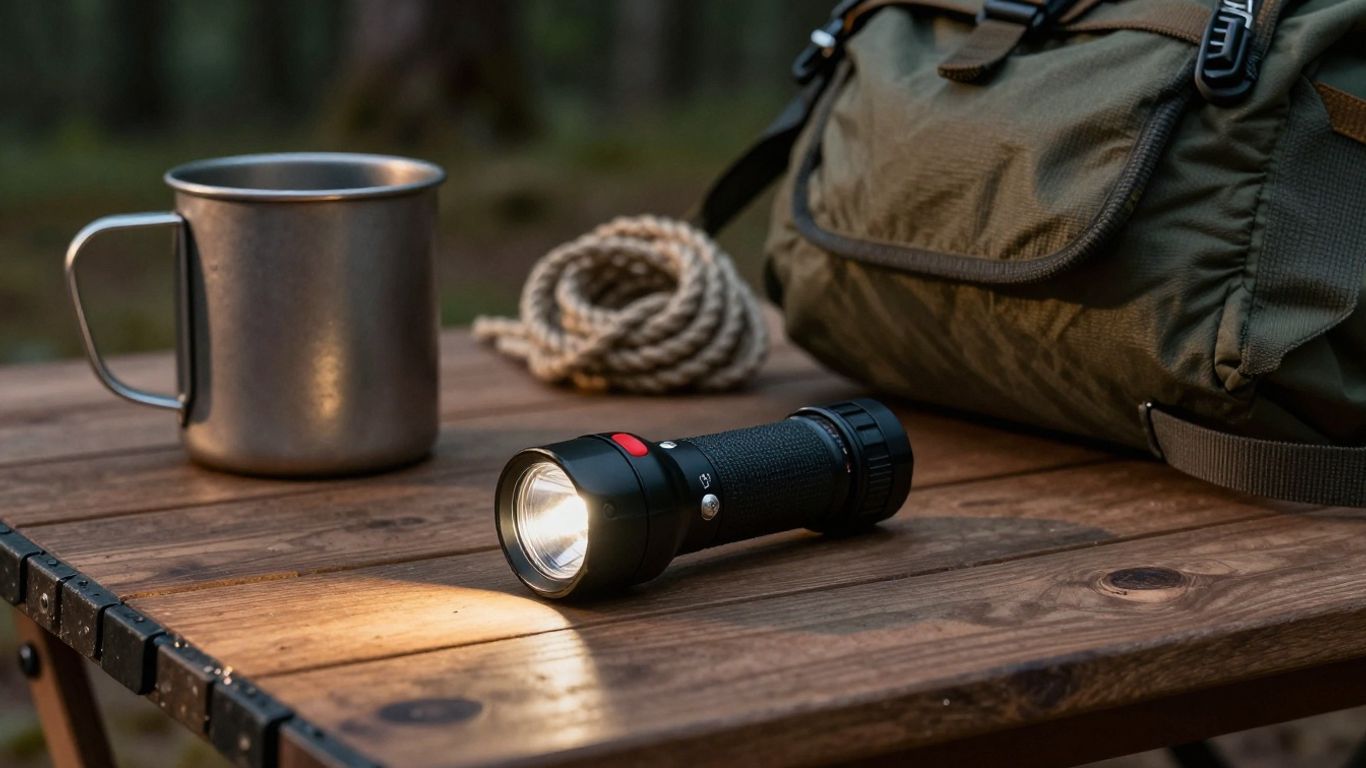
Adjustable Brightness Levels
Several brightness levels let me adapt the light to the setting. users can use a lower level inside a tent, a moderate level around camp, and a stronger level when users need to inspect a distant area. This flexibility can make the battery last longer and reduce glare for people nearby.
users look for a control pattern that feels predictable. If I must cycle through many modes to reach the one users want, the extra settings may become a nuisance. A clear switch and a quick way to return to a familiar level are more useful to me than a complicated interface.
Spot and Flood Beam Options
Spot and flood beams solve different problems. A spot beam concentrates light for distance, while a flood beam spreads it across a wider working area. If users expect to move between trails and campsite chores, having both options can reduce the need to carry separate lights.
The distinction is easiest to apply when I think in tasks. users use reach for navigation and coverage for setup, cooking, or searching through equipment. This simple split keeps their decision practical and helps me understand what a flashlight’s beam controls are meant to do.
Battery Life and Charging
Battery capacity affects how often users need to stop and recharge. users should check the stated battery type, charging method, and approximate charging time before buying. I also bring the correct cable or spare power source, since a capable light is less useful if users cannot restore its charge.
Here is the comparison framework users use when deciding how a light fits their trip:
| Feature | Short campsite visit | Multi-night camping | Remote or high-use trip |
| Battery capacity | Basic capacity may be enough | Higher capacity adds convenience | Prioritize capacity and backup power |
| Charging access | Vehicle or wall outlet nearby | Pack a compatible charging option | Plan charging before departure |
| Brightness use | Mostly low or medium | Mixed settings | Frequent high-output use is possible |
| Backup plan | Spare batteries or cable | Extra power source | Redundant lighting is wise |
The table is a planning tool, not a promise of runtime. users still check the manufacturer’s specifications and test the light before leaving. A short charging routine at home can reveal whether the controls, cable, and battery setup work for their actual habits.
Durable and Weather-Resistant Design
Outdoor gear faces dust, drops, damp ground, and changing temperatures. users look for a flashlight made for regular handling, with a shape that feels secure and a housing that does not seem fragile. Weather resistance is especially useful because a sudden shower should not immediately end the evening’s plans.
I also consider how the light will be stored and transported. A compact body is easier to keep in a pocket or side compartment, while a stable base or useful secondary function can make one item serve more of their routine. These details often matter more than a feature that I rarely use.
Portability and Versatility
A portable flashlight should be comfortable to carry without disappearing in their gear. users should check its size, weight, grip, and access to the main switch. If users can retrieve it with one hand and understand the controls immediately, users are more likely to use it well.
Versatility should remain practical. A light that supports trail checks, campsite work, and basic emergency needs earns its space in their pack. users avoid choosing features simply because they sound impressive; each one should solve a problem I may actually face outdoors.
Multi-Functional Design
A multi-functional light can reduce the number of separate items users bring. For example, a flashlight paired with an integrated camping light may cover both focused and ambient illumination. A power-bank function can also be relevant when their trip includes devices that need charging.
Before users rely on those functions, I confirm how they fit their plan. users bring the right cable, keep the device charged, and remember that charging another device uses stored energy. A thoughtful setup makes versatility helpful instead of turning it into another source of uncertainty.
AF3: Designed for Every Outdoor Lighting Need
The AF3 Camping Flashlight is documented as an all-terrain camping flashlight with several lighting and power features. Its bright 6000K-7000K flashlight beam comes from a central 5050 super white 10W LED and eight OSRAM P8 LEDs. That makes the documented flashlight beam relevant to focused outdoor illumination.
The same product page describes an integrated camping light with a warm 2800K-3200K glow. It also lists a 5000mAh 21700 lithium battery, 10W charging power, and an approximate 3.5-hour charging time. I would use those details as a starting point, then compare them with the length and remoteness of their own trip.
The AF3 is also documented as functioning as a 10W power bank and as a durable, feature-rich option for outdoor use. I would keep the light charged before leaving and carry the cable needed for their devices. If the documented features match their plans, users can explore the AF3 before choosing their next camp light.
Conclusion
When I decide how to choose a camping flashlight, I begin with the tasks users expect, then compare beam coverage, brightness control, battery planning, portability, and durability. A light that fits those needs will be more useful than one chosen only for maximum brightness. With a quick test before departure and a simple backup plan, users can move around camp with more confidence after dark.
Frequently Asked Questions
What should users look for in a camping flashlight?
users look for a comfortable design, adjustable brightness, useful beam coverage, dependable battery life, and charging that fits their trip. Weather resistance and simple controls are also valuable outdoors.
How bright should a camping flashlight be?
The right brightness depends on the task. Lower settings work well inside a tent or near camp, while stronger settings help with trails and distant areas.
Is a spotlight or floodlight better for camping?
Neither is always better. A spotlight helps with distance, while a floodlight covers a wider work area. A light with both options can be more flexible.
How long should a camping flashlight battery last?
It should last through the expected hours of use between charging opportunities. users consider brightness settings, trip length, and whether users can bring spare power.
Are rechargeable flashlights good for camping?
Rechargeable flashlights can be convenient when users have access to a compatible cable or power source. users still plan how I will recharge the light during the trip.
What size flashlight is best for camping?
A compact flashlight is easier to carry, but the best size depends on battery needs, grip comfort, and intended use. users choose one users can access quickly without adding unnecessary bulk.
Should users bring a backup light camping?
Yes. A small backup light, spare batteries, or another suitable power source can help if the main flashlight is misplaced, drained, or damaged.
Portable Car Awning vs Retractable Car Awning: Which One Is Better?
Vehicle Awning vs Camping Canopy: Which One Should You Choose?