

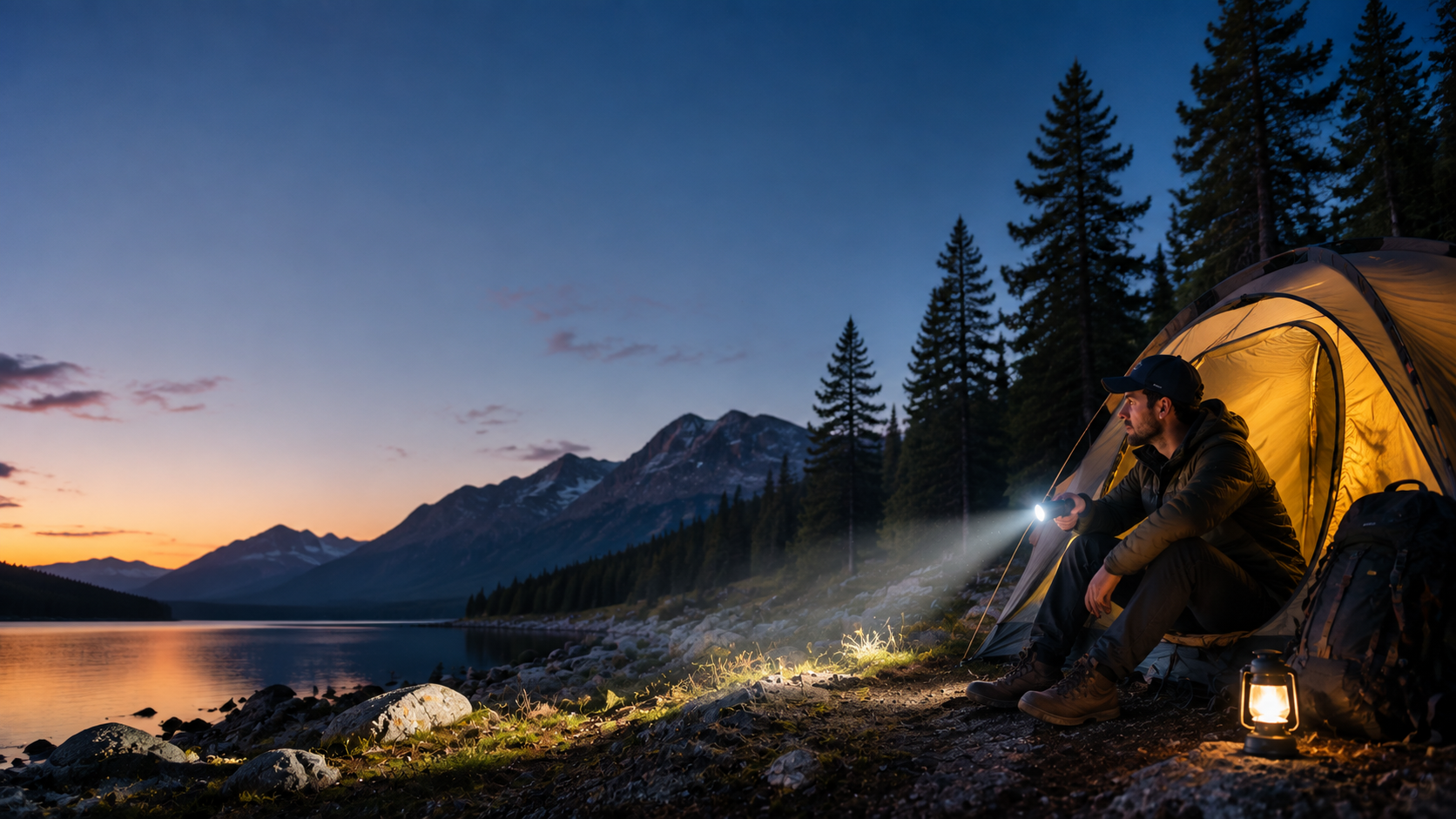
The right camping flashlight is not necessarily the one with the biggest number on the box. The best choice depends on the task, beam, runtime, and how easily it can be carried.
- Choose brightness based on the camping situation, not maximum output alone.
- Around 100 to 300 lumens suits many routine campsite tasks.
- Higher output helps with hiking, open areas, and emergency use.
- Adjustable modes can extend runtime and reduce glare.
- Beam distance, pattern, battery life, and portability matter just as much as lumens.
What Are Lumens and Why Do They Matter?
Lumens describe the total amount of visible light a flashlight produces. That number gives campers a useful starting point when comparing camping flashlight brightness. Still, it does not tell the whole story. Two lights with similar lumen ratings can feel very different because of their beam shape, optics, battery, and runtime.
What Does Lumens Mean?
A lumen measures the total visible light emitted by a source. A higher rating generally means more light is available, but it does not automatically mean the light reaches farther or illuminates a wider area. A focused beam may look intense in the distance, while a broad beam may make a nearby campsite feel brighter.
For a simple reference, a small light around 50 to 100 lumens can help with close tasks inside a tent. A light in the 100 to 300 lumen range often works well for walking around camp. Higher settings are useful when the surroundings are open, uneven, or especially dark.
Why The Highest Lumens Is Not Always Better
Maximum output can drain a battery quickly and create harsh glare when used around other campers. It may also make nearby objects look washed out, which is not helpful when someone is sorting gear or reading a map. Practical brightness beats headline output for most nights outdoors.
A sensible camping flashlight brightness guide therefore starts with the lowest useful setting. The light should offer enough output for the task, while preserving stronger modes for navigation, spotting, or emergencies. This approach makes the flashlight more comfortable and more dependable.
How Many Lumens Do You Need for Different Camping Situations?
The answer to “how many lumens for a camping flashlight” depends on what the camper needs to see. A quiet night at an established campsite calls for less light than a pre-dawn walk on an unfamiliar trail. The following ranges are practical starting points rather than strict rules.
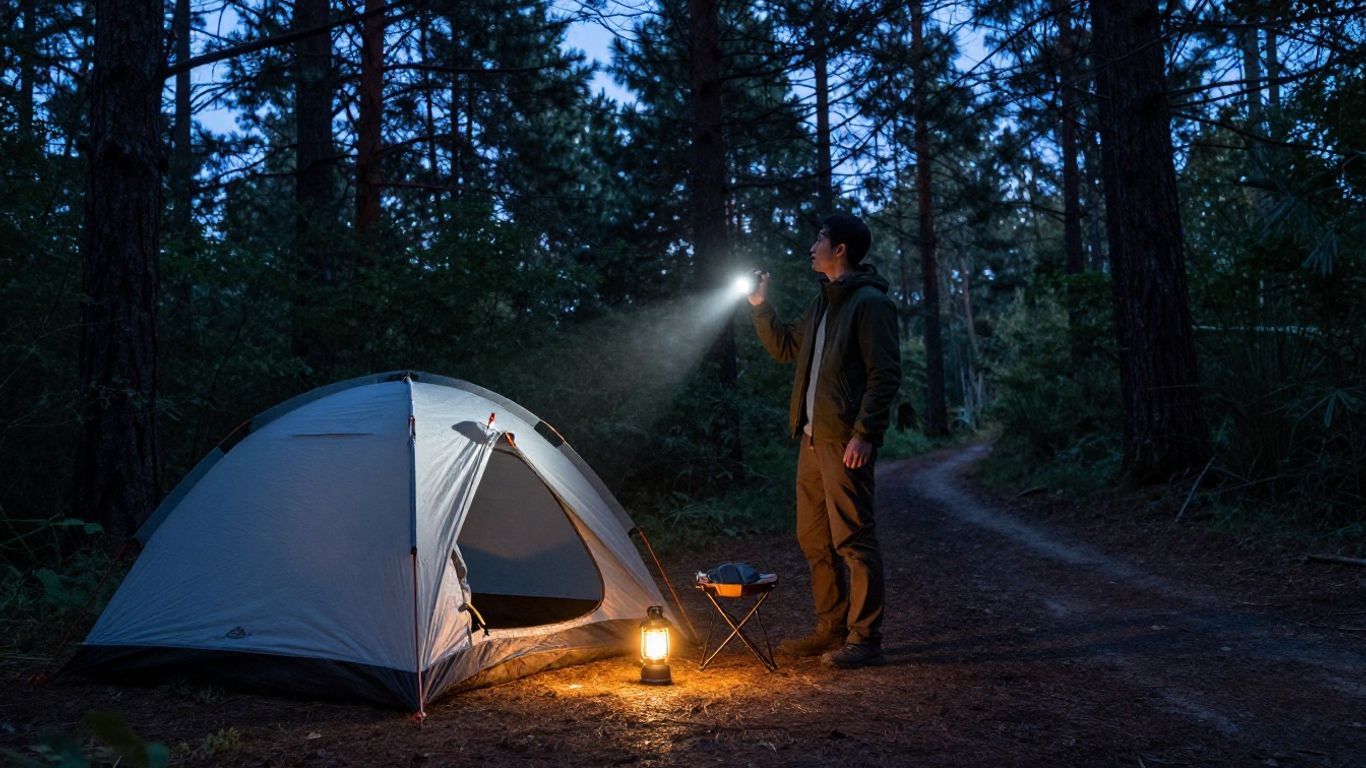
For cooking, unpacking, and moving around a familiar campsite, 100 to 300 lumens is usually a comfortable target. A lower mode can handle close-up jobs without lighting up the entire site. For reading inside a tent, even less may be enough, especially when the beam is diffused.
Trail use calls for more reach and a stronger reserve. Around 300 to 600 lumens can help a camper identify rocks, roots, and turns, while 600 lumens or more may be useful in open spaces or during poor visibility. The best lumens for camping flashlight use still depends on beam distance and how long that output can last.
Emergency situations require flexibility more than a single high figure. A bright setting can attract attention or scan a wide area, but a lower setting preserves battery power while the camper handles practical tasks. A rechargeable camping flashlight can be a useful part of a broader kit when it is charged before departure and paired with a backup power plan.
| Camping situation | Useful starting range | Main reason |
|---|---|---|
| Tent reading and close tasks | 20–100 lumens | Limits glare and saves power |
| Routine campsite use | 100–300 lumens | Lights paths and gear nearby |
| Hiking and route finding | 300–600 lumens | Improves distance and ground visibility |
| Emergency scanning | 600+ lumens | Provides a stronger reserve when needed |
These ranges help narrow the search, but they should not replace the product’s mode and runtime details. A flashlight with several useful settings may serve more situations than a brighter light with only one harsh output.
What Brightness Level Is Best for a Camping Flashlight?
The best brightness level for a camping flashlight changes with the setting, weather, and distance. Campers also see better when their eyes have time to adjust to darkness. Starting low and increasing output only when needed is often more comfortable than using maximum power from the beginning.
For Casual Camping
For casual camping, 100 to 300 lumens is a practical range for most campsite movement. It can illuminate a short path, help locate items, and support simple cooking or setup. A warm nearby light may feel more comfortable than a powerful white beam when people are sitting around camp.
A camper who stays close to a vehicle or established site may need less output than someone crossing a large, uneven campground. The useful question is whether the light makes the next few steps and the immediate work area clear without disturbing everyone nearby.
For Hiking and Outdoor Exploration
Hiking at night places more value on beam reach and ground detail. A setting around 300 to 600 lumens can be a reasonable starting point, with higher output reserved for open terrain, route checks, or difficult conditions. A narrow, controlled beam can also make moderate output feel more effective.
A camper should test the light before leaving. It helps to check whether the beam reveals uneven ground, whether the switch is easy to operate, and whether the selected mode lasts long enough for the planned route.
For Emergency Situations
Emergency use benefits from a wide range of brightness levels. A high setting can help search a larger area, while a lower setting conserves power during extended waiting, repairs, or first-aid tasks. The strongest mode should be treated as a reserve, not the default.
A light with charging capability can add another layer of usefulness. The Volanter AF3 has a 5000mAh 21700 lithium battery, 10W charging power, and a 10W power bank function, according to its product information. Those documented features can matter when a camper needs to recharge a small device away from a normal outlet.
Why Adjustable Brightness Matters More Than Maximum Lumens
A flashlight with adjustable output can match the light to the moment. That matters because campsite tasks vary from reading a label to checking a distant trail marker. One fixed setting usually forces a compromise between comfort and battery use.
A low mode is useful inside a tent or near sleeping campers. A medium mode can cover cooking, packing, and short walks. A high mode gives the camper extra reach when the trail opens up or something needs to be found beyond the immediate campsite.
A useful set of modes may include:
- A low setting for reading and close work.
- A medium setting for campsite movement.
- A high setting for trails and open ground.
- A short burst or emergency setting for signaling or scanning.
These modes make the flashlight easier to live with over several nights. They also reduce the temptation to judge every product only by its maximum lumen figure.
Lumens Are Not The Only Thing To Consider
Lumens answer one question: how much visible light does the flashlight produce? They do not answer how far that light travels, how evenly it spreads, or how long the battery supports it. A careful buyer looks at the full performance picture.
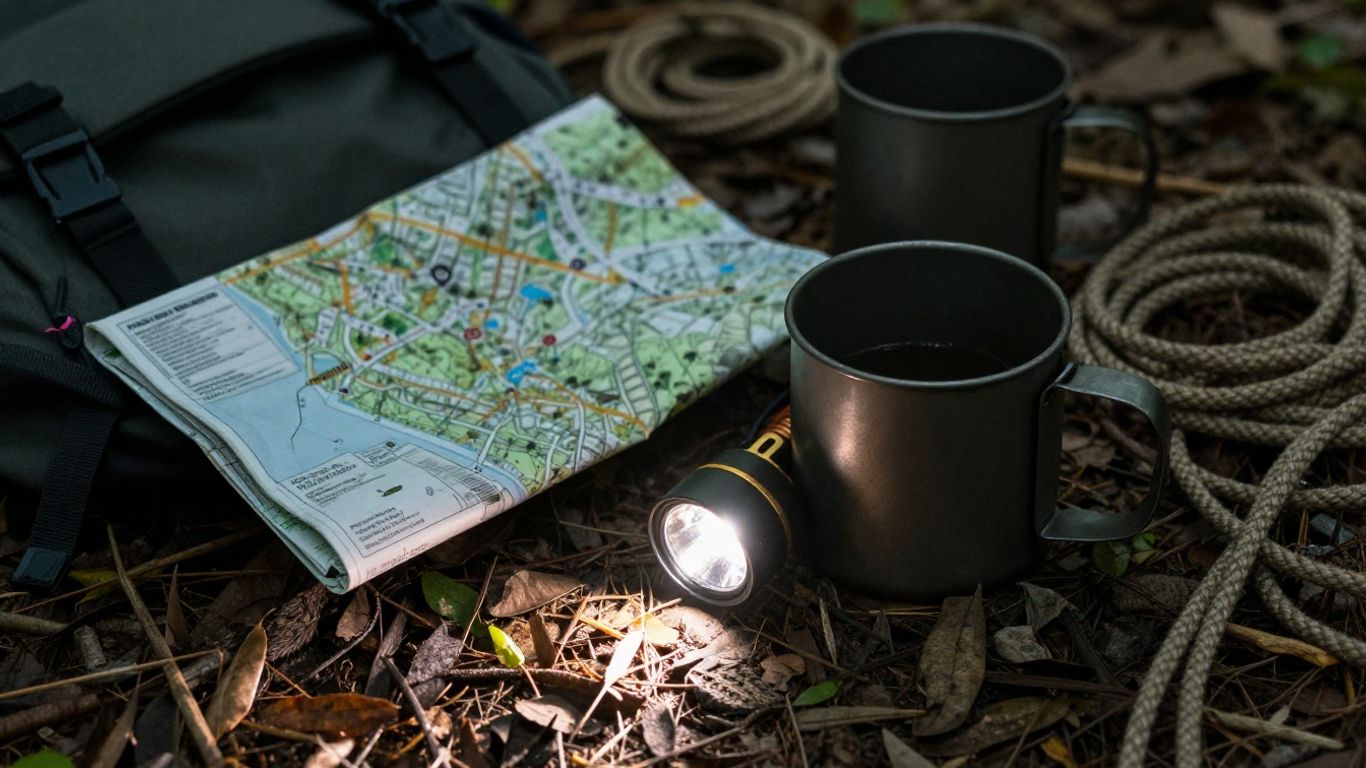
The Volanter AF3 illustrates why output can be considered alongside light color and charging features. Its product information lists a 10W 5050 super white LED and eight OSRAM P8 LEDs, with a 6000K–7000K flashlight beam. It also lists rear 2835 warm-light LEDs producing a 2800K–3200K camping light.
A camper can compare the practical details that shape everyday use:
- Beam distance for paths, trees, and open ground.
- Beam pattern for focused or nearby illumination.
- Runtime at the modes that will actually be used.
- Size, weight, grip, and charging convenience.
This wider comparison prevents a bright but inconvenient light from winning on specifications alone. For more context, a flashlight testing guide can help readers think about output, runtime, and beam distance together.
Beam Distance
Beam distance describes how far the flashlight can project useful light. It matters most when a camper is walking beyond the fire ring, checking a trail, or looking across an open campsite. A higher lumen rating may help, but reflector design and beam focus also affect the result.
A long beam is not always the best choice for close work. A concentrated hotspot can make distant objects easier to spot, yet it may leave the ground immediately around the camper less evenly lit. Campers should consider whether they need to see far ahead, nearby obstacles, or both.
When comparing lights, the Volanter AF3 can be considered for its listed 6000K–7000K flashlight beam and multi-LED front lighting. Those details describe its light components, but they do not replace checking the stated beam distance and real use conditions. Weather, dust, terrain, and the user’s night vision all affect what the beam feels like outdoors.
Beam Pattern
Beam pattern refers to the shape and spread of the light. A focused pattern can help with route finding and distant objects, while a wide, even pattern works better for cooking, packing, and moving around a tent. Some campers need both types during the same trip.
A harsh hotspot can be tiring when used close to the face or ground. A softer spill around the central beam can make nearby objects easier to see without constant aiming. The right balance depends on whether the flashlight is mainly a path light, work light, or general campsite tool.
A camper can test beam pattern against real tasks before packing. Point the light at the ground, a nearby table, and a distant tree. If one mode handles all three without excessive glare or dark gaps, the flashlight may be more versatile than its lumen number suggests.
Runtime
Runtime is the length of time a flashlight operates before its battery needs charging or replacement. It is tied to brightness, battery capacity, temperature, and the way the flashlight manages output. A high mode that lasts only briefly may be less useful than a moderate mode that covers an entire evening.
Campers should check runtime at each useful setting rather than relying on one headline figure. They should also consider how many nights the trip will last and whether charging will be available. A rechargeable flashlight can be convenient, but it still needs a charging routine before departure.
A simple power plan reduces surprises. The camper can charge the light fully, carry a suitable cable, and reserve the highest mode for tasks that truly need it. Lower settings should handle routine work whenever they provide enough visibility.
Portability
Portability affects whether a flashlight is carried or left behind. A light that fits easily in a pocket, pack side pocket, or tent organizer is more likely to be available when darkness arrives. Grip shape and switch placement matter too, especially when the camper is wearing gloves or carrying other gear.
Size should match the trip. Car campers may accept a larger body and larger battery, while backpackers often prefer a compact light that does not compete with food, shelter, and clothing for space. A lanyard, stable base, or simple way to set the light down can also improve campsite use.
The most useful choice balances carrying comfort with the required brightness and runtime. A premium-looking specification sheet cannot compensate for a flashlight that is awkward to hold, difficult to charge, or easy to misplace. The goal is a light that becomes a natural part of the camping kit.
Conclusion
Campers usually need about 100 to 300 lumens for routine campsite tasks, more for hiking or emergency scanning, and adjustable modes for everything between. Lumens are only one part of the decision; beam distance, pattern, runtime, and portability determine how useful a camping flashlight feels after dark. Readers can compare those practical details, choose a suitable range, and explore the AF3 when a rechargeable outdoor light fits their plans.
Frequently Asked Questions
Is 100 lumens enough for camping?
Yes, 100 lumens can be enough for close tasks, tent use, and moving around a familiar campsite. It may feel limited on long or uneven trails.
How many lumens are good for hiking at night?
Around 300 to 600 lumens is a useful starting range for many nighttime hikes. Beam distance, terrain, weather, and runtime should also guide the choice.
Is higher lumen output always better?
No. Higher output can create glare and use more battery power. A flashlight with useful adjustable modes may be more practical than one with a higher maximum.
What is the difference between lumens and beam distance?
Lumens describe total visible light output, while beam distance describes how far useful light reaches. Optics and beam focus affect distance as well.
Does beam pattern matter for camping?
Yes. A focused beam helps with distant route finding, while a wider beam is better for nearby work such as cooking, packing, and finding gear.
How long should a camping flashlight run?
It should last through the expected evening at the brightness levels the camper plans to use. Checking runtime by mode gives a more realistic picture than checking only the maximum setting.
Are rechargeable flashlights suitable for camping?
They can be a good choice when the battery is charged before the trip and the camper has a way to recharge it. A backup power source or secondary light is still sensible for longer outings.
Vehicle Awning vs Camping Canopy: Which One Should You Choose?
How to Choose the Right SUV Awning